You frequently take for granted the important role that your eyes perform. When your daily visual experiences include seeing your children, your partners, or a breathtaking sunset, it might be difficult to envision life without sight.
You know how crucial it is to take care of your joints, hearts, and minds, but one area of the body you frequently forget about is your eyes.
As you age, your vision becomes weaker. You also risk developing visual issues that could compromise your independence and way of life.
Older persons frequently experience vision issues such as glaucoma, cataracts, age-related macular degeneration, and diabetic retinopathy.
Although you cannot stop your eyes from aging, you can slow the effects of aging by taking good care of your eyes.
You may take care of your eyes and maintain good vision by following the advice below.
Have Routine Eye Exams
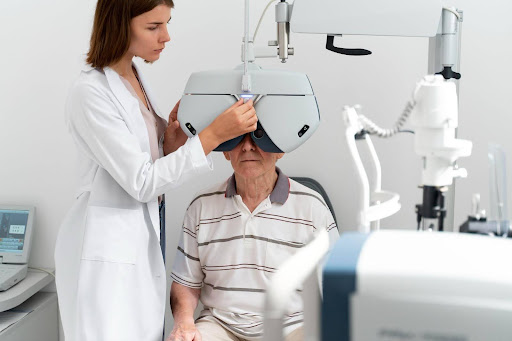
You should start getting yearly eye exams at the age of forty and have your eye doctor check for glaucoma and retinal damage, even if you’re an adult in good health with no vision problems.
People with visual issues or certain medical diseases, such as diabetes, which increases the risk of eye illnesses, should see an eye doctor before age forty.
Ask your eye doctor to suggest the right screening intervals that will assist keep clear vision based on your risk factors and the preliminary results of your exam.
Put On Sunglasses
The sun’s ultraviolet rays can harm aging eyes just as they can harm the skin. Cataracts and macular degeneration may both be accelerated by UV radiation. Sunglasses with UV filters are the greatest type of eyewear for protecting the eyes from the sun.
Although if you require a prescription, you can’t have too much wraparound without distorting the images, sunglasses should be big and wrap around a little. Any colour lens will work as long as it has UV filters.
Put a Cap On
Melanoma frequently develops on the eyelid. When spending any amount of time outdoors, wear a hat with a wide brim. A hat will provide you with additional protection in addition to sunglasses.
In order to prevent melanomas from developing on your skin, Keep the sun off your face and eyes while gardening, playing golf, or playing tennis.
Opt for a Fruit- and Vegetable-Rich Diet
The antioxidants lutein and zeaxanthin should be consumed in sufficient amounts to help prevent age-related eye diseases, including cataracts and macular degeneration.
Fruits and vegetables with yellow and orange hues, such as corn, squash, carrots, and citrus fruits, contain lutein and zeaxanthin. They can also be found in dark green leafy vegetables like kale and spinach.
Take Vitamin Supplements
Zinc and vitamins A, C, and E have been demonstrated to support eye health. In the 1950s, doctors believed that people didn’t require supplements if they ate a typical, balanced diet.
However, some of today’s soil is overfarmed and less nutrient-rich than it formerly was. Even when you try to eat well, you still fall short.
Make sure to select a multivitamin that satisfies all the criteria for your age and stage of life when making your selection.
Pay Attention to Warning Indicators
If detected early enough, many potentially serious visual issues can be treated by eye experts. Consult a medical professional if you have double or blurred vision, foggy vision, eye pain, or discomfort from light glare.
All of these are indicators that you might be developing visual issues that your eye specialist can correct.
Conclusion
Time cannot be stopped, but you can take care of your eyes to keep them in good condition as you get older. Don’t assume that you have perfect vision. Utilize the resources that are available to keep children healthy.
As you become older, it’s crucial to remember to maintain optimal eye health. Your eyes can see for a very long time if you maintain good health, safeguard your eyes, and have regular eye exams.
If you need a high-quality laser eye clinic in Abbotsford, you should check out Valley Laser Eye Centre.
We’re a vision correction center with state-of-the-art technology, a comfortable setting, and amazing staff. Schedule a session with us to experience a seamless vision clinic experience.