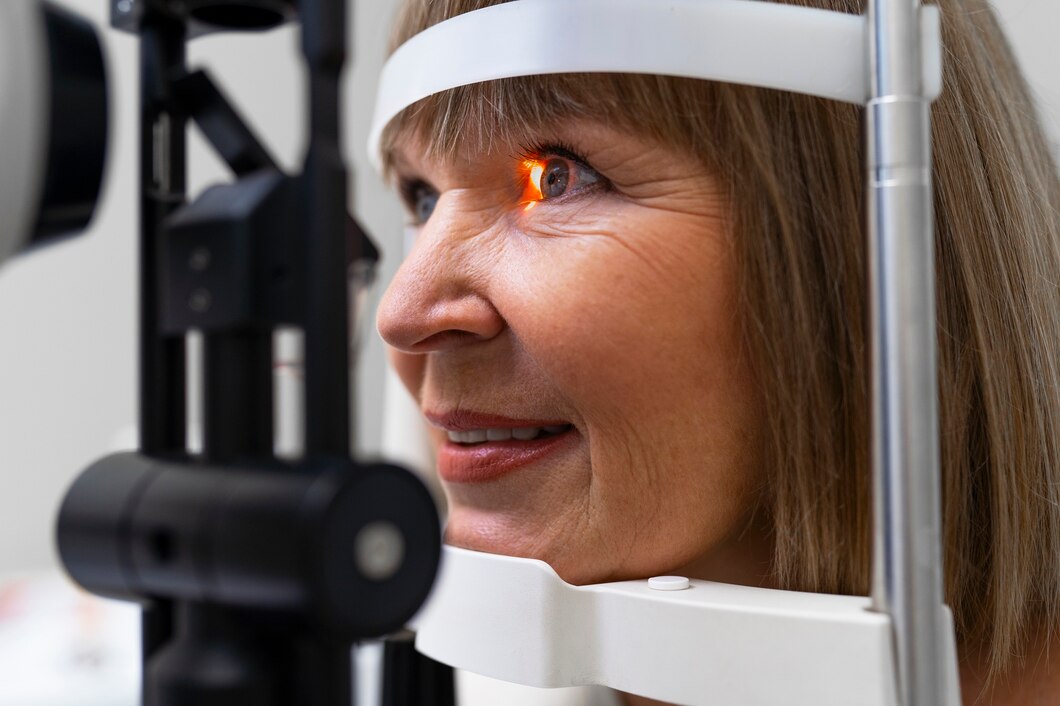
When a procedure as non-invasive as LASIK is available, people often think it is right for anyone. LASIK is not a magic solution for everyone, though, but it can be an excellent solution for thousands of applicants. It’s important for eye doctors to conduct an eligibility screening involving vision prescription and eye health. A person’s age is also a factor as to whether or not they can get LASIK surgery.
What Is LASIK Eye Surgery?
The term LASIK is an acronym for “laser-assisted in situ keratomileusis.” LASIK eye surgery is a popular laser refractive surgery that helps people to get their vision problems corrected. A special kind of cutting later is used for the clear tissue at the eye’s front that’s dome-shaped (the cornea) to be changed in a specific manner.
When eyes have normal vision, the cornea refracts (basically, bends) light precisely onto the retina, which is found at the back of the eye. Light bends incorrectly when myopia (nearsightedness), hyperopia (farsightedness), or astigmatism are at play. As a result, the vision ends up blurring.
While contact lenses or glasses can help to correct that, a good way of addressing it is by reshaping the cornea. That way, the proper refraction will be provided.
What Makes A Person A Good Candidate For LASIK Eye Surgery?
A Good LASIK Eye Surgery Candidate Has An Ideal Eye Structure
Doctors will turn you down for LASIK surgery if your eyes don’t meet certain standards. They explain that the size of your pupils, the thickness of your corneas, and more are all important criteria.
Refractive procedures will help visual acuity along to reshape the cornea (front surface of the eye). This is because the cornea may be too thin or misshapen to support the corrective lenses in addition to reshaping it. If you have thin corneas or an irregularly shaped cornea (for example, if you have keratoconus), you are at a higher risk for complications during and after the procedure. This may affect the results and impair your vision.
A Good LASIK Eye Surgery Candidate Has Healthy Eyes
A person needs to have healthy eyes for them to qualify as good candidates for LASIK eye surgery. Cataracts, glaucoma and other underlying conditions and injuries will make a difference.
However, if your eye doctor finds that you suffer from dry eyes, they may try to treat the condition with eye drops or ointments before re-evaluating to see if your condition has improved.
A Good LASIK Eye Surgery Candidate Has Stable Vision With Some Prescription Limits
While LASIK is safe and effective in most patients 20 and older, people should wait until their vision remains the same prescription for at least 12 months. This will allow the eyes to settle over time.
When refractive errors are severe, a different vision correction surgery type may be more imminent. This is only the case when prescriptions end up disqualifying a person for LASIK surgery.
Conclusion
LASIK eye surgery is a popular refractive surgery that helps to correct vision. While it’s incredibly helpful, there’s still criteria that has to be met for a person to be a good candidate. Qualities include stable vision within certain prescription limits and healthy eyes.
Need the services of a reputable laser eye clinic? Contact Valley Laser Eye Centre today! We offer a wide range of services with state-of-the-art technology, amazing staff and a comfortable setting.
This blog post does not replace medical advice and should not be implemented prior to consulting a fully certified medical professional.